A walk-in cooler not holding temperature usually has one of three problems: warm air is getting in, air is not moving across the coil, or the condensing unit cannot get rid of heat. Check the door, the fans, the coil and the condenser, in that order. If it still reads above 41°F, move product and call.
It is 6 a.m. The opener steps into the walk-in and the readout says 46. The fans are running, nothing looks broken, and a produce delivery lands at 8. Running warm is the call we get most, and what you do in the next few minutes decides how much product you keep.
Why Is My Walk-In Cooler Not Getting Cold?
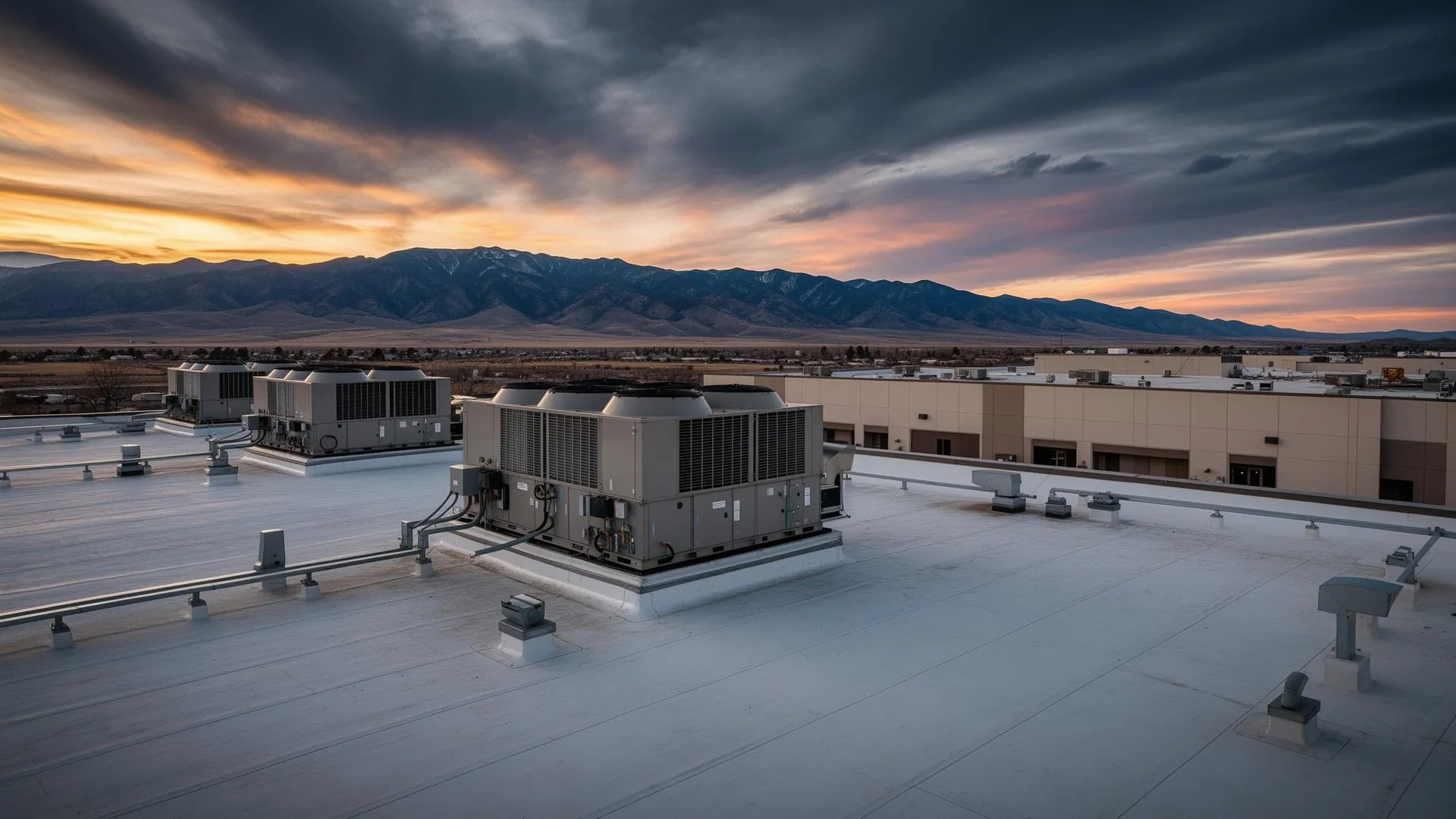
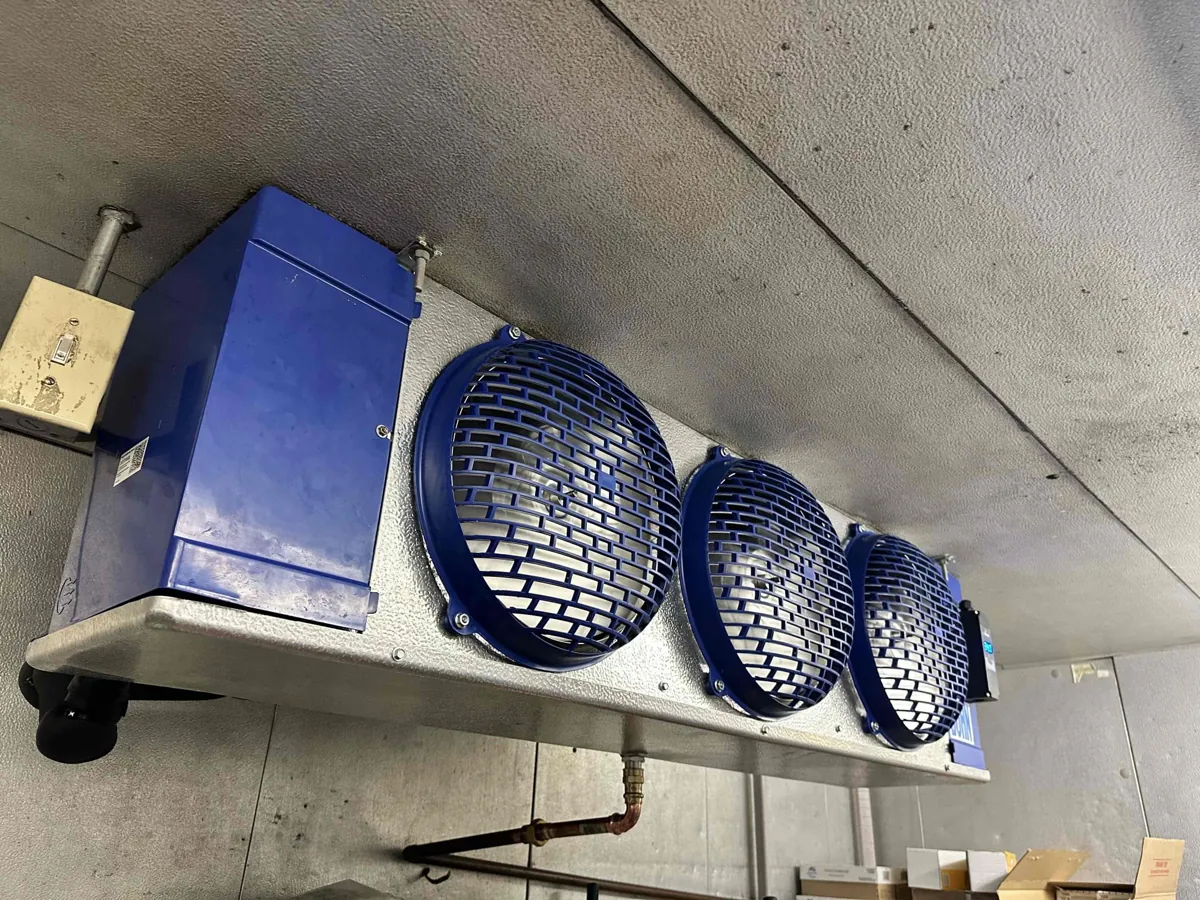
A walk-in is two machines working together. The evaporator inside the box pulls heat out of the air. The condensing unit, usually outside or on the roof, throws that heat away. When the box runs warm, one of those two has fallen behind, or warm air is coming in faster than they can remove it.
Heatcraft's unit cooler manual names the usual suspects for a room that runs too warm: a thermostat set too high, low refrigerant, an iced-up coil and heavy air infiltration. Your crew can check most of that list just by looking. Refrigerant belongs to a technician.
Confirm the number first. The FDA Food Code (section 4-204.112) says a cooler's sensor should read the warmest part of the unit, which is often near the door. Put your own thermometer there, then probe a pan of food. A readout can climb during a defrost cycle and drop back after, so see whether the control shows a defrost before you move anything.
What Should I Check First When a Walk-In Is Running Warm?
Anyone on the crew can do this walk. Nothing on it needs a tool.
- Setpoint: read the control. A bumped dial or button happens more than people admit.
- Door: pull it to within an inch of closed and let go. Federal rules require automatic closers on most walk-ins built since 2009, and the closer should firmly shut the door from that point.
- Gasket: run your eye around the whole door. Look for tears, flat spots and gaps.
- Strip curtain: every strip should hang straight down. Tied-back or missing strips let warm air pour in each time the door opens.
- Evaporator fans: stand under the coil and look up. Every fan should be turning, and you should feel air moving.
- Coil: look for ice on the fins. Look only. Do not chip at it.
- Shelves: Heatcraft says not to stack product in front of the fans, and to leave a gap below the unit equal to its height. A big delivery can block that without anyone noticing.
- Condenser: if you can reach it safely, listen for it running and note whether the coil is due for cleaning. In cold weather its fan can cycle off, which may be normal. Stay out of the panels, and skip the roof if the access is icy or unsafe.
- Breaker: check the panel. If a breaker tripped, reset it once. If it trips again, leave it off and call.
Why Is My Walk-In Cooler Blowing Warm Air?
Fans running with no cold in the air means the evaporator has nothing to give. The compressor may be off, it may have tripped on a safety, or the system may be short of refrigerant. Go listen to the condensing unit. If the whole unit is silent and the breaker is on, stop there and call.
If it is running, look at the coil. Heat leaves the system through that coil, and dust, kitchen exhaust grease and cottonwood all get in the way. A condenser due for cleaning is one of the most common things we find. Heatcraft's condensing unit manual lists a coil like that, or a fan that is not running, among the causes of high discharge pressure. The compressor runs hotter and works harder until something gives.
Cold mornings can do it too.
An outdoor condensing unit relies on head pressure control to run properly in low temperatures. A box that drifts warm only on the coldest days of a Colorado winter is worth mentioning when you call, because it points the technician somewhere different.
Why Is There Ice on My Walk-In Cooler Fan or Coil?
A cooler coil runs below freezing, so it builds some frost as it works. That frost melts off when the system takes a break, then runs down the drain. Light frost that clears is normal. Thick ice that stays is a problem, because air cannot pass through it and the box warms up while the system runs hard.
Four causes cover most of what we see: a worn door gasket letting humid air in, low refrigerant, a defrost problem, or a blocked drain that lets water refreeze. Your crew can check the gasket. The rest take a technician.
Leave the ice alone. The fins bend easily and the tubes behind them hold refrigerant, so one slip with a screwdriver turns a service call into a leak repair.
Freezers ice up in their own ways, and where the ice sits matters. We wrote that up in what the ice in a walk-in freezer is telling you.
How Long Can Food Stay in a Warm Walk-In?
The number that matters is 41°F. The FDA Food Code (section 3-501.16) requires food that needs temperature control to stay at 41°F or less, and Colorado adopted the 2022 Food Code in March 2024.
You may have heard of a four-hour rule. Be careful with it. The Food Code's time-control section (3-501.19) allows up to 4 hours only with written procedures prepared in advance, food that started at 41°F or less, and a marked discard time. That section was written for a planned practice, so it will not cover a cooler that failed overnight.
So move early. Put the most sensitive product in another unit that reads 41°F or less. Write down times and temperatures as you go, and keep the door shut on whatever stays.
How long do you have? It depends on how full the box is, how warm the kitchen runs and how often the door opens. We would rather you move product early and have us find a stuck door than wait to see whether the box recovers.
For food that has already sat warm, the person in charge makes the call, and your local health department can tell you how the rule applies. Our post on walk-in cooler temperature for a health inspection covers what inspectors look at.
What Will the Technician Check on a Walk-In Cooler?
This is where your crew stops. Refrigerant, electrical panels and the compressor are technician work. A good visit looks at the whole system instead of the first thing that seems wrong:
- Refrigerant charge and superheat, with a leak search if the numbers are off
- Defrost controls, heaters and timing
- Evaporator and condenser fan motors
- Expansion valve and controls
- Compressor starts, pressures and amp draw
- Drain pan and drain line
- Box temperature through a full cycle after the repair
Tell the technician what your crew found and when the box started to climb, because that history saves time. Then ask what caused the failure, as well as what failed. A new fan motor will not last long if the ice that stopped the old one is still there.
If the compressor turns out to be the problem, the next question is bigger, and we walk through it in repair or replace the condensing unit.
Do Walk-In Cooler Repairs Qualify for a Rebate?
Some do, if your business is a commercial electric customer of Fort Collins Utilities, City of Loveland Utilities, Longmont Power & Communications or Estes Park Power and Communications. The program is Efficiency Works Business, and these amounts come from its sheet revised June 2026:
- Door gaskets: the Efficiency Works rebate is $6 per linear foot on a walk-in cooler, for a new gasket replacing a worn or damaged one.
- Strip curtains: the Efficiency Works rebate is $75 per door on a walk-in cooler.
- EC evaporator fan motors: the Efficiency Works rebate is $100 per motor in an existing walk-in, replacing a shaded pole motor.
- PMSM evaporator fan motors, such as Q-Sync: the Efficiency Works rebate is $250 per motor, replacing a shaded pole motor.
You apply with the invoice for the installed work. Amounts change, so check the current sheet before you count on one. On a different utility, ask them what they offer.
When Should I Call for Walk-In Cooler Repair?
Call when food is above 41°F, when the box keeps climbing after the door is shut and the fans are running, or when ice comes back after it clears. A silent condensing unit or a breaker that trips twice is enough on its own.
Walk-ins also tend to warn you before they quit. A box takes longer to recover after a delivery, the compressor rarely shuts off, or water shows up on the floor under the evaporator. Any of those is a good reason to call before the readout climbs.
Have three things ready: the reading, what you found on your walk, and what product is at risk. It helps us send the right parts the first time.
Accutemp handles walk-in cooler repair and restaurant refrigeration repair across Northern Colorado, with 24/7/365 emergency service. If your walk-in is climbing and you have run this list, call 970-686-8866 or contact us.